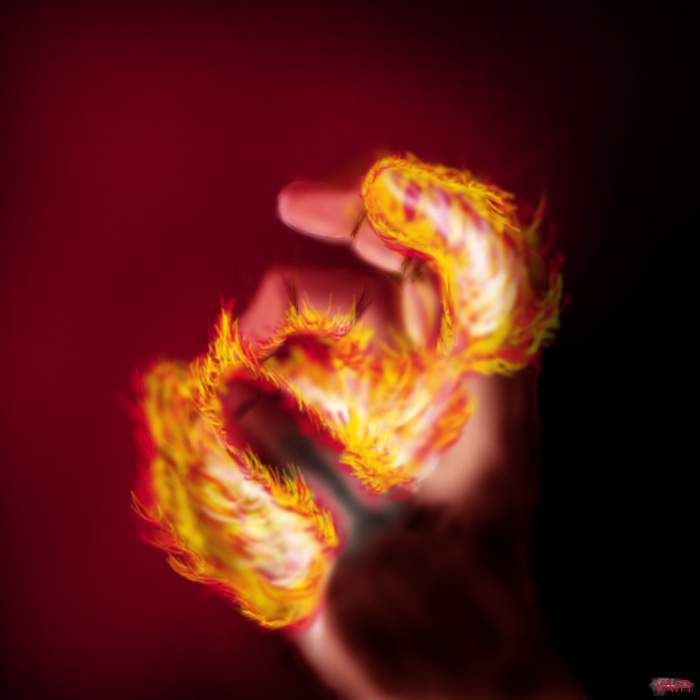
Now this is so kewl I had to pop it up at the ol' blog here...
If you don't see God when you look at this then you need your eyes checked!
Full story here... and image source, along with tons of other images, located here...
Amid the relentless images of the dead extracted from a building in Qana, amid the fiery anger those images generated – from Lebanon to Europe and from Egypt to Indonesia - and amid deafening global cries for an immediate ceasefire, a curiously contradictory picture is emerging from the battlefields of Hizballistan: Hizballah is on the ropes, running short of resources and desperate for a ceasefire for its very survival. (read more...)


Bush: Florida crime rate down to lowest level since '71
By BRENT KALLESTAD Associated Press Writer
TALLAHASSEE, Fla. —
Florida's crime rate dropped for the 14th straight year in 2005 to its lowest mark since 1971 because of tougher laws, increased financial support from the Legislature and law-abiding citizens with guns, Gov. Jeb Bush said Tuesday. (read more...)
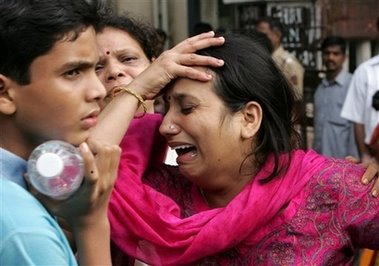
 The Scream (or The Cry) 1893; Edvard Munch
Soldiers of fortune go free as judge denounces Chirac over island coupFrom Adam Sage in Paris
COVERT attempts by President Chirac to exert influence over Africa were exposed by a French court yesterday, when it denounced his secret services for conniving with a band of mercenaries in a coup in the tiny Comoros Islands. (Read the rest here...)
My guess is you won't hear much about it in the NYTimes, but I could be wrong. Thanks to the goddess of the blogsphere, Alexandra at All Things Beautiful for posting this... She has some excellent commentary there.




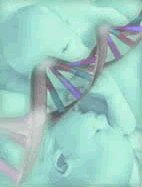
The problem with the argument these gentlemen are advancing lies primarily in this statement:C. Ward Kischer, PhD, human embryology professor emeritus, and Fr. Joseph Howard, M. Div., of American Life League, have issued the following statement regarding their analysis of an Altered Nuclear Transfer-Oocyte-Assisted Reprogramming (ANT-OAR) process proposed by Dr. William Hurlbut. This process, by which an experimental protocol would generate presumed pluripotent cells, but presumably not human embryos for research, raises many serious moral concerns and should be especially troubling for Catholics in the field of science. Dr. Kischer and Fr. Howard address the moral concerns of the proposal and reiterate the teachings of the Catholic Church when dealing with such delicate matters involving the gift of human life.
C. Ward Kischer, Ph.D., states that, “It appears that within an experimental protocol of ANT-OAR, through cloning, not all in the progeny of blastomeres may become genetically modified and therefore would likely be totipotent. Such a totipotent blastomere would indeed be equivalent to a human zygote who is a human embryo.”
For our analysis, the definitive question that arises is the following: Does the absence of the maternally imprinted gene products that are only produced when genes are inherited from the father impact the system dynamics of the whole parthenote ab initio substantially changing it so that the parthenote becomes a tumor, or does their absence only lead to a defective part of an embryo that becomes a tumor eventually killing the whole?
In response, we return to a key study, already mentioned above, that has shown that the absence of both paternally and maternally imprinted genes impacts the development of the embryo from the very beginning at the two-cell stage.19 Moreover, the absence of the maternally imprinted molecules impacts that parthenote at the level of the whole since the scientific evidence suggests that the imprinted genes regulates the overall number of cells that develop in the blastocyst. In addition, another study has demonstrated that the organization of a parthenote differs from the organization of a normal embryo from the very start: In normal development, when the single-celled mouse zygote divides into two cells, these two cells, called blastomeres, are already not identical. One of the two cells divides ahead of its sister and tends to contribute most of its cellular descendents to the embryo proper, whereas the other, later dividing cell, contributes cells predominantly to the extra-embryonic tissue including the placenta.20 However, in contrast, when a single-celled mouse parthenote divides into two cells, these two cells do not behave in the way that normal blastomeres would behave.21 The first cell that divides does not necessarily contribute its descendents to the embryo proper.This is a small but significant difference in organization that points to the difference between the parthenote and the normal embryo at the very earliest stages of the development. In sum, all of this data suggests that the forces that lead to tumor formation are already present at the earliest stages of embryonic development. In other words, the system dynamics of the parthenote as a whole already differs from the system dynamics of the normal embryo since normal embryos do not become teratomas. Like the complete mole, a parthenote is not an embryo.

...There appears to exist a nagging fear in the Church that a universe, which science has established as evolving for 13.7 x 1 billion years since the Big Bang and in which life, beginning in its most primitive forms at about 12 x 1 billion years from the Big Bang, evolved through a process of random genetic mutations and natural selection, escapes God’s dominion. That fear is groundless. ... Perhaps the following picture of God’s relation to the created universe, as that universe is seen by science and interpreted by a religious believer, may help to assuage that fear. In the universe, as known by science, there are essentially three processes at work: chance, necessity and the fertility of the universe. The classical question as to whether the human being came about by chance, and so has no need of God, or by necessity, and so through the action of a designer God, is no longer valid. And so any attempt to answer it is doomed to failure. The fertility of the universe, now well established by science, is an essential ingredient, and the meaning of chance and necessity must be seen in light of that fertility. Chance processes and necessary processes are continuously interacting in a universe that is 13.7 x 1 billion years old and contains about 1022 stars. Those stars as they “live” and “die” release to the universe the chemical abundance of the elements necessary for life. In their thermonuclear furnaces stars convert the lighter elements into the heavier elements. There is no other way, for instance, to have the abundance of carbon necessary to make a toenail than through the thermonuclear processes in stars. We are all literally born of stardust.I think Fr. Edward Oakes makes a more coherent statement....but Fr. Coyne does make some good points!
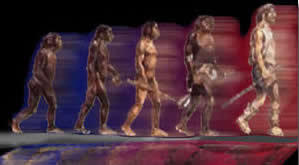
For one thing, the Church has no "doctrine" on evolution, any more than it has a doctrine on tectonic plates or a magisterial teaching on how human consciousness arises from the electrical firings inside the neurology of the brain. These matters are both beyond the competence of the magisterium and are irrelevant to salvation, anyway.
Secondly, even if the magisterium did have an official teaching on evolution, it does not officially revise its "views" on matters of science by having a cardinal, however "leading," writing an article "in propria persona" -- on his own behalf -- and using an op-ed piece in a secular newspaper to boot.
That said, I believe that Cardinal Schönborn's essay "Finding Design in Nature" in the July 7 issue of the Times makes a valid point, roughly the reverse side of the coin of what Pope John Paul II said in his now-famous letter to the Pontifical Academy of Sciences in October of 1996.
John Paul said at the time that "evolution" -- which, as Cardinal Schönborn rightly notes, the Holy Father left undefined -- can no longer be considered merely a "hypothesis" because so much data have now come in to confirm the theory.
The problem is that this very short letter brought some misinterpretations of its own in its wake -- because of the obnoxious way some Darwinians like to hijack the word "evolution" for their own atheistic purposes -- and it is those false conclusions, as I see it, that the cardinal was trying to warn against.
But, no, I do not see the cardinal's quite legitimate warning as a "new chapter in the evolution-vs.-creationism debate."
First of all, if "creationism" means six-day creation as a few Christian fundamentalists still hold, then there is no chance in the world that the Catholic Church will join that cause. But "creationism" can also refer to the total ontological dependence of the universe on God's creative act of will, and nothing in the theory of evolution can threaten that essential doctrine of the Catholic faith.
Remember that, according to St. Thomas Aquinas, even if the world happens to be temporally eternal, such an eternity of time would not undermine the created contingency of the world, utterly dependent on God's free decision to create it.
NCR: What did you think of The New York Times article by Cardinal Christoph Schönborn of Vienna on evolution?Good stuff! Go read the rest and copy it to your harddrive!
Cabibbo: Two things struck me, one positively and the other negatively. Positively, it opens a very interesting discussion. But I cannot agree with the way he handled the address of John Paul II to the Pontifical Academy of Sciences in 1996. I don't know if the problem was in a bad translation from German, but he calls it "vague and rather unimportant." I've never considered it that way, in fact I have always considered it very important. Not only for the now famous statement, that evolution is "more than a hypothesis," but also for what comes next: "It is indeed remarkable that this theory has been progressively accepted by researchers, following a series of discoveries in various fields of knowledge. The convergence, neither sought nor fabricated, of the results of work that was conducted independently is in itself a significant argument in favor of this theory," the Pope said. With these words the Pope demonstrated a clear understanding of the scientific method, on how an hypothesis can be transformed into a widely accepted fact. This allocution is in fact a very articulated expression of the thought of the late John Paul II.
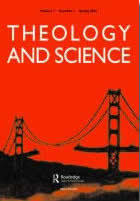
My own view is that God does act within nature and that Darwinian evolution is the result. Note, however, this is a theological claim, not a scientific one. Belief in God can inspire scientists to pursue specific scientific research proposals, but such research cannot include reference to God and remain within science. What this means is that teaching ID in public schools is not a matter of fairess to competing theories since ID is not an alternative biological theory. It is at most a theological claim in disguise. The worst problem is that ID proponents endorse this disguise by not telling us what they mean by agency. This strategy offers an apparent apologetic hope to believing Christians but it fails to deliver on that hope. This makes Christianity seem foolish to agnostic scientists who might otherwise have listened to us, and it promises only eventual disappointment to Christians who believe in it.This is a pretty good issue...don't miss it!